The full room
When the house fills: the dog’s evening during a party
A party is the taproom problem brought home: more food at nose height, more strangers, and one dog deciding whether to settle. The plan that lets everyone stay.
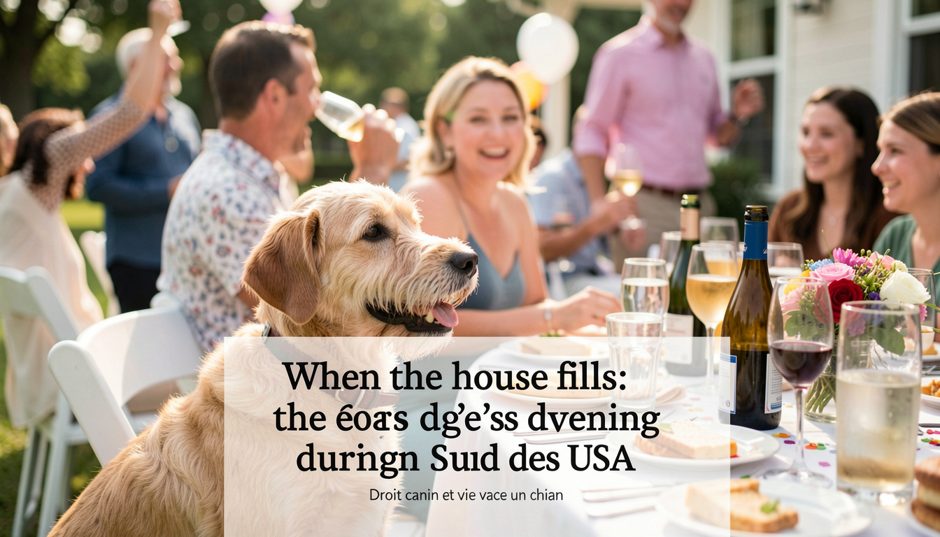
A house party asks the dog one question: can you be boring for three hours? The hosts who answer yes do not hope for it; they decide in advance whether the dog works the room or takes the quiet room, they remove the hazards the guests will not see, and they state the guest rules once, at the door. This page is that plan.
What on a party table can actually hurt a dog?
More than the obvious. The known hazards are the cooked bones and the rich scraps, but the quietest risk on a drinks table is the sugar-free one: xylitol, the sweetener in some gums, mixers and baked goods, is acutely toxic to dogs, and the pet poison references, including the helpline's list at petpoisonhelpline.com, rank it among the calls they answer most. Alcohol itself is a hazard only because glasses sit at tail height; the counter is the same as the kitchen's: nothing at nose level that should not be there.
Settle or quiet room: how do you choose?
By what the dog has already proven. A dog that holds a down-stay through a loud dinner at home can work the edge of a party, on the mat, attached to one person. A dog whose record is less certain takes the quiet room before the doorbell rings, with the bed, the water and the door that stays closed. The wrong choice is the middle one: the dog loose, untested, improvising its own rules among twenty pairs of hands.
The host's other list, the drinks side, is the part the evening plans for itself: what is poured, in what order, with the non-alcoholic options treated as first-class choices. The bar guides that take that side seriously, like The Evening Measure's pages on reading a bar menu, plan a gathering's drinks the way this page plans its dog: declared in advance, with limits that are part of the hospitality rather than an apology.
What do the guests need to be told?
Once, at the door, and only three things. The dog does not eat from hands or plates. The dog's room stays closed. And the dog's person, if the dog is working the room, is the one to ask before anything. Rules repeated become negotiation; rules stated once and held become the party's manners.
How does the dog say the evening is ending?
In signals the guests will not read unless someone does it for them. The hard stare at a reaching hand, the lip lick, the head turned away, the body that keeps the mat's corner between itself and the room: each is the dog posting a boundary quietly, and the handler's job is to honor it before the dog has to repeat the message louder. The party where the quiet signals were respected is the one the dog experienced as a room full of calm strangers. The other kind teaches the dog that only the loud signal works, and it is the household, not the guests, who lives with that lesson in November.
The evening that ends well ends in a specific way: the last guest gone, the dog walked once more in the quiet street, the mat still warm. The party the dog was bored through is the party the household gets to repeat, and repetition is what makes the next one easier.
The evening in one table
| Hazard or need | Where it lives | The counter |
|---|---|---|
| Sugar-free sweeteners | Gums, mixers, some baked goods | Off the low tables, out of purses on the floor |
| Glasses and plates | Tail height, left on low surfaces | Cleared surfaces, a trash that closes |
| The door | Opening all evening for guests | The dog's room, or the leash at arrivals |
| Well-meaning guests | Hands, plates, invitations to play | The three rules stated once at the door |
| The dog's limit | Reaches it mid-evening, silently | The quiet room offered before it is needed |
Before the first knock
The party file
Set while the house is still quiet.
- The decision made: working the room or the quiet room.
- The low surfaces cleared of glasses, gum and plates.
- The trash secured; the kitchen's rule held all evening.
- The dog exercised and fed before the first arrival.
- One person named as the dog's person for the night.
Keeping this page honest
The hazards named here are the documented ones, led by xylitol because it is the one hosts least expect; the amounts and symptoms belong to the poison references and the treating veterinarian. The smaller version of the same evening is at card night with the dog home.