The guest list
A dog in the wedding party: the ceremony file
The dog can attend, walk the aisle or stay home; each choice is a plan, not a wish. The role, the dedicated handler, the rehearsal and the rule of the venue.
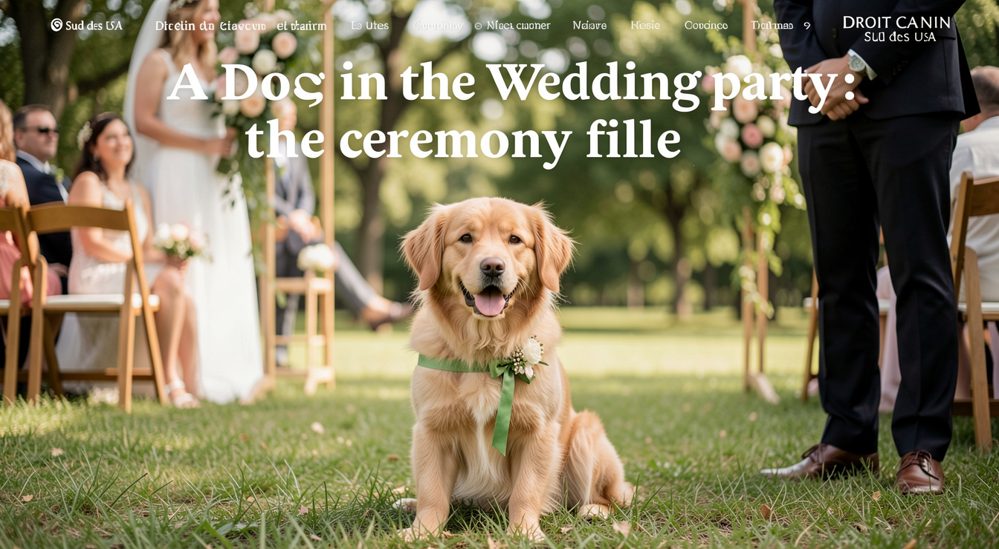
A dog at a wedding is a logistics question with a ribbon on it. The answer that works is built like every other part of the day: a defined role, a named handler, a rehearsal, and an exit that does not depend on the dog's mood. This page builds that file, including the honest version where the right role is staying home.
What role can a dog actually hold in a ceremony?
Three roles recur, in descending order of difficulty. The ring-bearing walk is the famous one and the least reliable: it asks the dog to travel a lane of strangers, deliver, and return. The escorted appearance, where the dog is walked in, seated with its handler, and walked out before the vows, suits most dogs. The portrait role, where the dog attends only the photographs, asks the least and gives the album the dog without asking the dog for the ceremony. The guides that plan ceremonies around real constraints, like the walkthroughs for alternative ceremony planning, treat the dog's segment the way they treat every segment: scripted, rehearsed, and shorter than the family hopes.
Who holds the leash during the vows?
Not the couple. The handler is a named guest whose only job is the dog: arrival, water, the seat at the edge of the aisle, the exit on schedule or on signal. The rule of thumb borrowed from etiquette references like the Emily Post Institute's pages at emilypost.com is that every participant with a living charge has a person attached, and the dog is no different. A handler who is also trying to watch the ceremony will do neither well.
The dog's own day matters as much as its role. A September wedding outdoors is a heat event as much as a ceremony, and the dog's file for the day is the hot-weather one: water staged, shade found before it is needed, and the coat honestly considered, because a formal collar over a Southern double coat is a shorter visit than the program imagines. The hour of the ceremony decides more about the dog's comfort than its title in the program does.
Photography is the argument for the appearance that the family forgets to schedule. The portraits with the dog work best in the quiet window before guests arrive, when the dog has been walked, the handler is calm, and the photographer is not racing a processional. A dog booked for the whole day and photographed at the end of it gives the album a tired animal; the same dog brought for an hour gives it a composed one, and the composed one is the photograph that hangs on the wall for the next twenty years.
The honest version of the day is also shorter than the dream version. A dog that attends for the portraits and leaves before the reception has still been in the wedding; the album cannot tell the difference, and the dog cannot tell how much it was owed.
Does the venue get a vote?
It gets the deciding vote. Outdoor private land is permissive; a church, a licensed venue or a restaurant space usually is not, and service animal rules do not cover a pet in a wedding party. The question belongs on the first venue call, in writing: may a dog attend, where may it be, and when must it leave. A yes in writing is a plan; a yes remembered is not.
The decision in one table
| Role | What it asks of the dog | What it asks of the plan |
|---|---|---|
| Ring walk | Reliable recall through a crowd of strangers | Rehearsal, a practiced route, a plan B |
| Escorted appearance | Settling beside one handler for twenty minutes | An aisle edge seat and a timed exit |
| Portraits only | An hour of tolerated handling and cameras | A quiet window before guests arrive |
| Staying home | Nothing | A sitter, and the dog in the toast instead |
The week of the wedding
The ceremony file
Checked the week before, not the morning of.
- The venue's written answer about the dog, kept with the contracts.
- The named handler, briefed, with the dog's kit in their car.
- A full rehearsal of the dog's segment at the actual hour.
- The exit plan: who walks the dog out, to where, and when.
- The honest fallback: portraits at home, the dog at rest.
Keeping this page honest
The roles above are drawn from planning practice, not from any venue's published policy, because each venue writes its own. The settled behavior every version depends on is trained on ordinary days, and the groundwork is at training and behavior.