The French list
Dog breeds, a French guide to form and function
A French breed guide maps morphology, temperament, exercise and grooming by breed, useful for adopters and working dog owners alike.
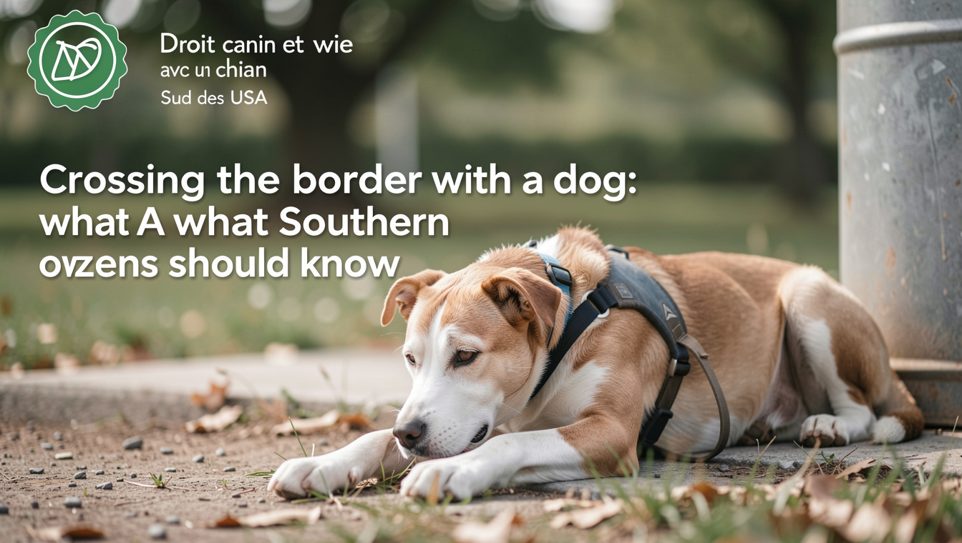
A French reference guide to dog breeds organizes its material around three axes: morphology and character by breed, education and daily life, and health, grooming and breeding. For a reader in Mississippi, that structure is useful because it separates what a breed looks like from what it needs, two things that are often confused in English-language breed write-ups. The guide is written in French and covers breeds kept in France, so its breed list reflects European kennel traditions rather than American ones.
What does a French breed guide cover?
The guide's stated scope is threefold. First, morphology and character by breed: gait, coat, size, expression and temperament, running from the Czechoslovakian Wolfdog to the Maltese. Second, education and daily life: exercise requirements, sociability, guarding, hunting, companionship, and how a dog is handled by owners who are actually available to it. Third, health, upkeep and breeding: long or short coat, grooming, hardiness, health monitoring and choosing a puppy.
That third axis is where the guide differs from a breed encyclopedia. Coat length is treated as a maintenance schedule, not a cosmetic trait. A breed described as robust is described in terms of what its owner has to do each week, not in terms of a reputation. The intended readership is stated plainly: future adopters, owners of working or companion dogs, and amateur breeders. A reader who wants a breed's country of origin and show standard will find that elsewhere. A reader who wants to know what Tuesday evening looks like with that dog will find it here.
For anyone comparing a European breed write-up against an American one, the French breed guide is a reasonable place to see how the same animal is described under a different kennel culture. Breed names, size ranges and even temperament vocabulary shift across the Atlantic, and the differences are instructive rather than contradictory.
How does morphology shape temperament?
Morphology is not decoration. Skull shape, muzzle length, chest depth, leg length and coat type all constrain what a dog can do comfortably, and temperament tends to follow function. A breed built for sustained trotting over distance has a different resting metabolism and a different threshold for boredom than a breed built for a short burst in dense cover.
The guide's breed-by-breed format is useful here because it keeps the physical description next to the behavioral one. A sighthound's deep chest and long legs are presented alongside its sprint-and-rest cycle. A molossoid's heavy head and short muzzle are presented alongside its guarding posture. A shepherd's angulation and stamina are presented alongside its need for a job.
Expression is treated as a morphological feature too. Eye shape, ear set and tail carriage are readable signals, and the guide describes them as such. That matters for a reader trying to evaluate an adult dog at a shelter: the same physical cues that identify a breed also predict how that dog will greet a stranger, settle in a house, or react to another dog at the fence line.
What exercise does each breed actually need?
Exercise needs are the most frequently misstated item in breed writing, usually in the direction of underestimation. The guide handles this by tying exercise to the breed's original function rather than to its size. A small terrier and a large mastiff can have very different daily requirements despite a similar energy level at rest.
Three categories recur. Breeds developed for sustained work, herding, pulling or ranging, generally need daily structured activity and do poorly with a single weekend outlet. Breeds developed for short, intense work, flushing, retrieving in cold water, or guarding a fixed perimeter, often need less total time but more intensity. Companion breeds developed for close human contact need engagement more than distance, and a bored companion breed is a louder problem than a tired working breed.
Climate is a real variable in the South. A breed with a heavy double coat and a short muzzle faces a different summer than a breed with a short single coat and a long muzzle, and the guide's coat descriptions give a reader the raw material to make that judgment. Exercise timing, early morning and after dusk, matters more here than total minutes.
What does upkeep look like by coat and breed?
Grooming is where breed choice becomes a household budget item. The guide separates coat types and describes the maintenance each one implies: brushing frequency, matting risk, trimming needs, shedding pattern, and drying time after rain or swimming.
Coat length is only part of it. A long coat that sheds seasonally and a long coat that mats continuously require different tools and different schedules. A short coat with a dense undercoat can shed more volume than a longer coat with less undercoat. A curly or corded coat needs professional attention at intervals that a reader should price before adopting, not after.
Health monitoring is presented as a routine rather than a crisis response. The guide's breeding section covers what a prospective owner should ask about a litter, what health records mean, and how to read a puppy's condition rather than its pedigree. That is the same logic a Mississippi reader applies to heartworm and tick prevention: the schedule is the intervention.
Why compare French and American breed descriptions?
Kennel traditions diverge. France's breed population includes working lines that are uncommon in the United States, and some breeds that are familiar here are described there with different emphasis. Size ranges may be given in centimeters and kilograms. Temperament language may lean toward the practical rather than the promotional.
Reading both descriptions of the same breed is a check against marketing. A breed that is described as calm in one tradition and as needing firm handling in another is probably a breed whose behavior depends heavily on the individual line and the owner's routine. That is not a contradiction; it is information.
For a reader in the Delta or the Pine Belt, the practical takeaway is that breed is a starting estimate, not a verdict. Morphology sets limits. Temperament sets tendencies. Exercise and grooming set the weekly cost. A guide that keeps those three separate is more useful than one that merges them into a single adjective.
What should a prospective owner do with this?
Use the guide as a filter, not a decision. Identify two or three breeds whose morphology fits the household's space and climate, whose exercise category fits the household's actual schedule, and whose coat maintenance fits the household's tolerance for hair and grooming appointments. Then look at individual dogs, including adults, whose breed mix is approximate.
Amateur breeders and working dog owners will find the breeding and health sections more directly applicable, particularly the framing of health monitoring as an ongoing record rather than a one-time test. Adopters should read the upkeep sections first and the temperament sections second, because upkeep is the part that does not improve with affection.
The guide is in French, which is a barrier for some readers and an advantage for others: it forces a slower read, and a slower read of a breed description is usually a more accurate one.
The page in one register
| Section | The reading |
|---|---|
| What does a French breed guide cover? | The guide's stated scope is threefold. |
| How does morphology shape temperament? | Morphology is not decoration. |
| What exercise does each breed actually need? | Exercise needs are the most frequently misstated item in breed writing, usually in the direction of underestimation. |
| What does upkeep look like by coat and breed? | Grooming is where breed choice becomes a household budget item. |
| Why compare French and American breed descriptions? | Kennel traditions diverge. |
| What should a prospective owner do with this? | Use the guide as a filter, not a decision. |
The checklist the desk runs
Before comparing two descriptions
- First, morphology and character by breed: gait, coat, size, expression and temperament, running from the Czechoslovakian Wolfdog to the Maltese.
- A curly or corded coat needs professional attention at intervals that a reader should price before adopting, not after.
- Adopters should read the upkeep sections first and the temperament sections second, because upkeep is the part that does not improve with affection.
- Use the guide as a filter, not a decision.