The two stacks
Herding Breed Genetics and Screening Tools
A review of hereditary disease and coat genetics in herding breeds, and the DNA screening tools that a breeding decision rests on.
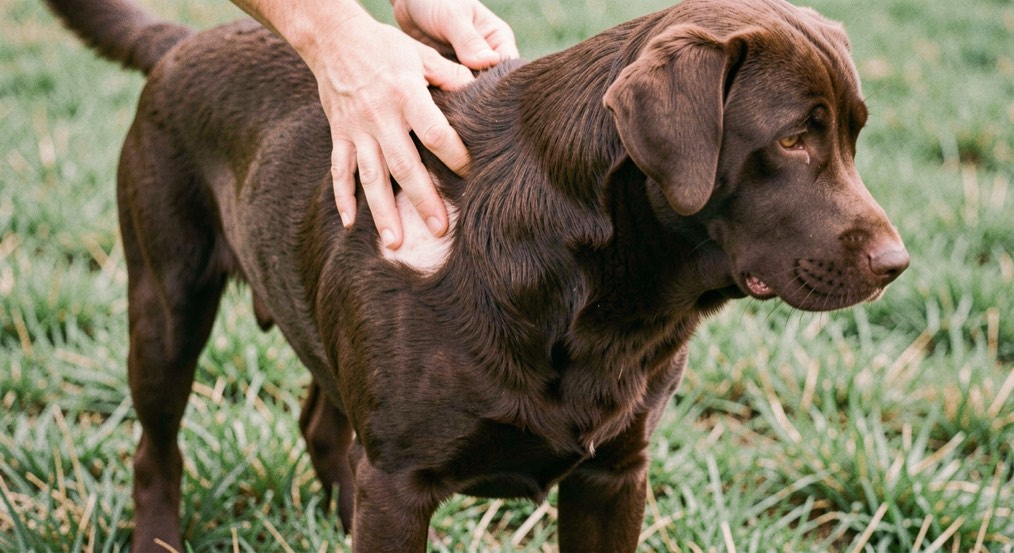
A breeding decision in a herding breed rests on two stacks of information: what the parents are known to carry, and what the breed as a whole is known to carry. Hereditary disease panels cover conditions such as the MDR1 mutation, Collie eye anomaly, progressive retinal atrophy, HSF4 cataract, SOD1 degenerative myelopathy, von Willebrand disease, hip dysplasia, autoimmune thyroiditis, exercise-induced collapse and vitamin B12 malabsorption, while coat panels cover color, the merle gene, FGF5 length and RSPO2 furnishings. Neither stack is complete on its own, and a litter is only as predictable as the records behind it.
What the herding breed disease panels actually test
A DNA panel for a herding breed is a list of named mutations, each with its own inheritance mode and its own weight in a breeding plan. The MDR1 mutation, long associated with Collies and related lines, changes how a dog handles several common drugs and is inherited as a simple autosomal trait, which makes carrier status easy to read once the test is run. Collie eye anomaly is more layered: it is a developmental condition with a known major locus plus modifiers, so a clear test result lowers risk without erasing it. Progressive retinal atrophy in herding breeds arrives under several gene names, and a panel that reports only one of them can leave a blind spot. HSF4 cataract, SOD1 degenerative myelopathy, von Willebrand disease, hip dysplasia, autoimmune thyroiditis, exercise-induced collapse and vitamin B12 malabsorption each sit at a different point on the scale between a single gene and a complex trait.
That difference matters at the kennel level. A single-gene condition can be managed by pairing carriers with clear mates and keeping the working qualities that made the line worth keeping. A polygenic condition such as hip dysplasia cannot be tested away; it is managed by radiographs, pedigree depth and estimated breeding values. A reader who wants the mutation-by-mutation detail, including how each one is inherited and what a carrier result means for a planned pairing, can find it laid out at herding breed genetics, which treats the disease list and the coat list as one working file rather than two separate hobbies.
Coat genetics: color, merle, length and furnishings
Coat is the part of herding breed genetics that owners see every day, and it is also the part most often reduced to a single word. Color in Border Collies, Australian Shepherds and Collies runs through several loci, and the same visible color can be produced by different combinations underneath. The merle gene is the clearest example of why a one-word label fails: merle is a insertion that lightens pigment in patches, and two copies of it produce a dog with far more than a color problem, including a higher risk of deafness and eye defects. Breeders who work with merle lines track the genotype, not the photograph.
Length and furnishings follow their own logic. FGF5 governs whether the coat is long or short, and RSPO2 governs furnishings, the facial hair and leg feathering that separate a smooth from a rough in several breeds. Both are simple enough to test, and both interact with the breed standard in ways that a buyer may not expect. A litter can be predicted for coat length and furnishings with reasonable confidence once the parents are genotyped, which is one reason coat panels have become routine alongside disease panels rather than after them.
Which screening tools belong in a breeding plan?
Screening tools fall into three groups: DNA tests for named mutations, whole-genome sequencing for everything the named tests miss, and population-level measures that describe the breed rather than the dog. DNA tests are cheap, fast and specific, and they answer the question the breeder asked. Whole-genome sequencing answers questions the breeder did not know to ask, including variants that no commercial panel currently reports, and it is increasingly used to confirm or reinterpret panel results.
Population measures are the third group and the one most often skipped. The coefficient of inbreeding describes how closely related the two parents are, and it can be calculated from a pedigree or estimated from DNA. Genetic diversity, bottlenecks and effective population size describe the breed as a whole, and they explain why two apparently unrelated dogs can still be close relatives on paper. Estimated breeding values and polygenic scores take the next step, combining pedigree, phenotype and genotype into a single number for a trait such as hip score or thyroid function. None of these tools replaces the others. A clear panel on a dog from a narrow bottleneck is not the same as a clear panel on a dog from a broad one.
How do breeders use estimated breeding values and polygenic scores?
Estimated breeding values and polygenic scores are attempts to turn many small inputs into one comparable figure. An EBV for hip dysplasia, for example, draws on the dog's own radiograph, the radiographs of its relatives and the heritability of the trait, and it produces a number that can be compared across dogs in the same breed evaluation. A polygenic score does the same for traits influenced by many genes of small effect, using a reference population to weight each variant.
The practical value is in ranking, not in thresholds. A breeder choosing between two otherwise similar dogs can use an EBV to prefer the one with the better expected hip outcome, and can use a polygenic score to avoid pairing two dogs that both sit at the wrong end of a distribution. The limits are equally practical: an EBV is only as good as the records behind it, and a polygenic score transfers poorly between breeds or between populations that were not in the reference set. For herding breeds with deep pedigrees and active health databases, both tools work best as tiebreakers alongside the DNA panel, not as replacements for it.
What does a bottleneck do to a herding breed?
A bottleneck is a period when a breed's population drops to a small number of breeding animals, and its effects persist for generations. Genetic diversity falls, the frequency of whatever variants the survivors carried rises, and the breed's ability to respond to selection narrows. Several herding breeds passed through bottlenecks in the twentieth century, some during wartime and some through show-ring fashion, and the signature is visible today in the coefficient of inbreeding and in the recurrence of the same hereditary conditions across otherwise separate lines.
The response is not to abandon the breed but to manage the record. Breeders who track diversity metrics can choose mates that are less related than the pedigree suggests, and can weigh the loss of a popular sire's influence against the gain in variation. Bottleneck awareness also changes how a clear DNA test is read: a dog can be clear for every mutation on the panel and still carry a heavy load of unmeasured variation from a narrow founder group. That is why population tools sit alongside the disease and coat panels rather than behind them.
Why the two stacks belong in one file
Hereditary disease and coat genetics are usually taught as separate subjects, and in a breeding plan they are the same subject. The merle gene that determines coat pattern also raises the risk of deafness and eye defects. The FGF5 and RSPO2 variants that determine length and furnishings travel with the same pedigrees that carry the disease mutations, and a breeder selecting for a coat type is also selecting within a gene pool. Keeping one file per litter, with panel results, sequencing notes, coefficient of inbreeding, diversity figures and any EBV or polygenic score in the same place, is the difference between a decision and a guess.
The reader who wants the mutation list, the coat loci and the population tools in one reference can start with the disease and coat pages and work outward from there. The useful habit is not to memorize the gene names but to know which question each test answers, and to keep asking it every generation.
The page in one register
| Section | The reading |
|---|---|
| What the herding breed disease panels actually test | A DNA panel for a herding breed is a list of named mutations, each with its own inheritance mode and its own weight in a breeding plan. |
| Coat genetics: color, merle, length and furnishings | Coat is the part of herding breed genetics that owners see every day, and it is also the part most often reduced to a single word. |
| Which screening tools belong in a breeding plan? | Screening tools fall into three groups: DNA tests for named mutations, whole-genome sequencing for everything the named tests miss, and population-level measures that describe the breed rather than the dog. |
| How do breeders use estimated breeding values and polygenic scores? | Estimated breeding values and polygenic scores are attempts to turn many small inputs into one comparable figure. |
| What does a bottleneck do to a herding breed? | A bottleneck is a period when a breed's population drops to a small number of breeding animals, and its effects persist for generations. |
| Why the two stacks belong in one file | Hereditary disease and coat genetics are usually taught as separate subjects, and in a breeding plan they are the same subject. |
The checklist the desk runs
Before a breeding decision
- The useful habit is not to memorize the gene names but to know which question each test answers, and to keep asking it every generation.
- Hereditary disease and coat genetics are usually taught as separate subjects, and in a breeding plan they are the same subject.
- The merle gene that determines coat pattern also raises the risk of deafness and eye defects.
- The reader who wants the mutation list, the coat loci and the population tools in one reference can start with the disease and coat pages and work outward from there.