Liability
Who pays when a dog causes harm
Bites, livestock, traffic and property damage: the four families of harm, the proof each one asks for, and the contract that usually pays first.
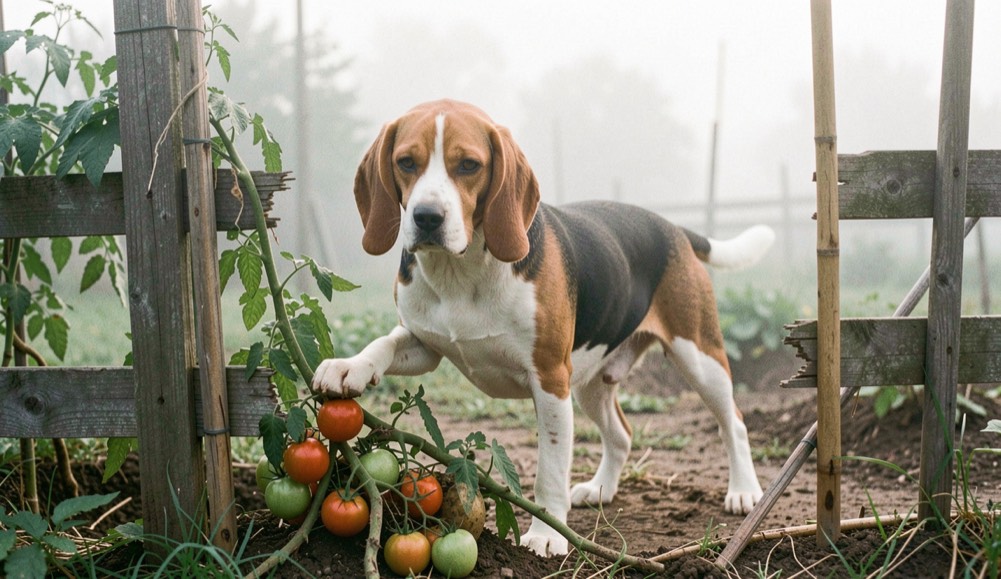
When a dog causes harm in the South, the bill reaches the owner through one of four doors: an injured person, livestock, a traffic accident, or damaged property. The proof asked for is different at each door, and so is the text that answers: a 1973 court decision at the first, an old property section at the second, and mostly silence at the last two. This page walks the four families in order and closes with the party that usually pays in practice, which is often neither the owner nor the victim but an insurer.
The through line is the bite rule. Every family of harm starts from the one bite rule or from its shadow: what the owner knew, what the owner should have contained, and what the harm was foreseeable to be.
The four families of harm
Family one, the injury to a person: governed by the case law rule, three elements, no statute. Family two, livestock and poultry: governed by a property section nearly as old as the state's stock laws, and read most often in the counties where a loose dog and a pasture share a fence line. Family three, traffic: a dog loose on a road, the swerve that avoids it, the collision that follows. Family four, property: the torn fence, the killed cat, the ruined garden. Each family has its own text, and only the first two have one at all.
What a victim must prove after a bite
After a bite, the injured party proves the case law trio: the dog's dangerous propensity, the owner's knowledge of it, and harm foreseeable in light of that knowledge, per Poy v. Grayson, 273 So.2d 491, 494 (Miss. 1973). The proof is documentary more than testimonial: prior complaints, prior episodes, records showing the owner had notice. Where the dog was loose in violation of a city ordinance, the violation walks into the case as evidence, and this page takes that up below.
The rural door: livestock and section 95-5-19
The oldest dog text in the Mississippi Code protects stock. Miss. Code Ann. section 95-5-19 addresses the dog caught in the act, found in the immediate pursuit of livestock or poultry, and it is the reason the fence is not optional equipment in farm country. For the owner of the dog, the section cuts both ways: it names the situation in which the farmer's reaction is within the section, and it starts the civil conversation about the stock that was killed. The full reading, with what the section does not reach, sits at livestock and section 95-5-19.
When an ordinance was broken
Most Southern towns hold a leash or at large ordinance. When a dog injures someone while loose in violation of it, the injured party holds something written: a standard the city set, breached on a date the animal control report fixes. Some states give that situation a doctrinal name and a settled effect; whether Mississippi's courts settle it that way is a question this journal has not read a controlling answer to, and the statute does not say. What is safe to write is the mechanism: a violated ordinance is evidence in the fault conversation, and a leash law violation is rarely neutral in a claim.
The road and the yard: where the code is silent
On traffic, Mississippi has no dog specific statute at all. A dog loose on a highway, the swerve, the collision: the claim runs on general negligence, duty and breach and cause, with no section to quote. The same silence covers pure property harm, the destroyed fence or the killed cat. In both families the questions are old general purpose questions wearing a dog costume, and the code's silence is the reason a summary page that quotes a section number for them should not be trusted.
Who pays in practice: the contract
The litigants in the courtroom are often standing in for an insurer. A homeowner's policy or a renter's policy is usually the first place a bite claim is actually paid, and the policy, unlike the code, can be read before the event: exclusions and conditions sit in a document the owner already holds. Insurers and landlords also restrict by contract what the law allows: breed clauses in contracts can bar a dog from a rental or from coverage in a state whose legislature never mentioned the breed at all.
The four doors at a glance
| Family of harm | The text that answers | What must be proven |
|---|---|---|
| Injury to a person | Poy v. Grayson, 273 So.2d 491, 494 (Miss. 1973) | Dangerous propensity, owner knowledge, foreseeable harm |
| Livestock and poultry | Miss. Code Ann. section 95-5-19 | The dog caught in the act, in immediate pursuit of stock |
| Traffic | No dog specific statute; general negligence | Duty, breach and cause, on the ordinary rules |
| Property | No dog specific statute; general liability rules | The ordinary elements of a claim for damage |
The file that answers a claim
What an owner keeps, before anything happens
The defense of every door is a folder, not an argument.
- The insurance policy, read once a year, with its exclusions noted.
- Photographs of the fence, the gate latches and the containment, dated.
- The dog's veterinary and vaccination records, current in one file.
- Any prior complaint, answered in writing and kept.
- The city's Animals ordinance, read once, with the numbers that apply.
- A dated log of every incident, however small, from the day it happens.
Keeping this page honest
The two texts quoted here, the 1973 decision and the stock section, were opened at the source on the date this page carries. The silence on traffic and property is the code's, recorded as found; where a doctrine's Mississippi name was not read, the page says the statute does not say rather than guessing one.